
Glass Measurement Challenges
Glass is widely used in modern industry and scientific research because of its transparency, hardness, and processability. However, accurate glass thickness measurement remains challenging, especially for transparent, reflective, curved, or multilayer structures.
Traditional methods such as micrometers or capacitive sensors can meet some production needs, but they often face limitations in accuracy, efficiency, and material adaptability.
Limitations of Traditional Methods
Contact measurement may introduce operator error and can risk scratching the glass surface. Some non-contact methods, such as laser triangulation, may struggle with transparent or highly reflective surfaces.
For special-shaped glass, curved glass, ultrathin glass, and multilayer glass structures, conventional methods may not provide stable and accurate results.

Chromatic Confocal Advantages
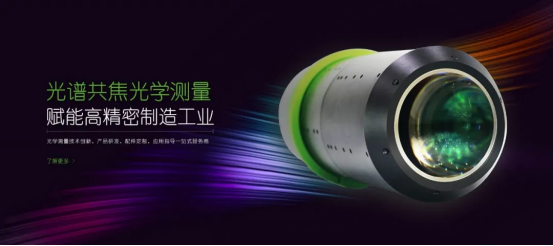
LightE chromatic confocal sensors use optical wavelength information to measure distance and thickness without contacting the target. The technology offers high resolution and strong adaptability to transparent and reflective materials.
Typical applications include flat glass online thickness inspection, glass coating thickness, multilayer glass structure measurement, edge thickness, chamfer height, surface defect height, and curved glass profile measurement.